





Those new to Bangkok or not overly familiar with it may think that Sukhumvit Road is just a busy thoroughfare connecting several neighbourhoods or districts within the capital. Others may assume it denotes a specific region of this bustling metropolis. It is undoubtedly one of the city’s busy arterial roads, and significantly more.
In fact, it is Thailand’s third-longest road at 488 km, starting near the Phloen Chit flyover and continuing through Bangkok and then south-east along the eastern seaboard all the way to the Cambodian border. It was completed around 1936 and named after Phra Bisal Sukhumvit, the Department of Highways’ chief responsible for several major road infrastructure projects around that time.
During the 1960s, the Nana and Asok areas along Sukhumvit Road became popular with US military troops on R&R from the Vietnam War. More hotels, clubs and bars appeared to service these visitors needing to let their hair down. By the 1990s, it was ‘party central’, attracting many American and European travelers.
Over the decades, more condos, shopping malls, entertainment venues and infrastructure appeared. In December 1999, with the completion of the BTS Skytrain ‘Sukhumvit Line’, living on Sukhumvit became even more appealing.
“Sukhumvit” is now known as Bangkok’s leading downtown commercial and residential district. Comparisons of this area of Bangkok have been made with London’s West-end, New York City Upper East Side, and Shanghai The Bund. However, this area called “Sukhumvit” can’t be considered an actual neighbourhood but rather an area that includes several districts dissected by Sukhumvit Road.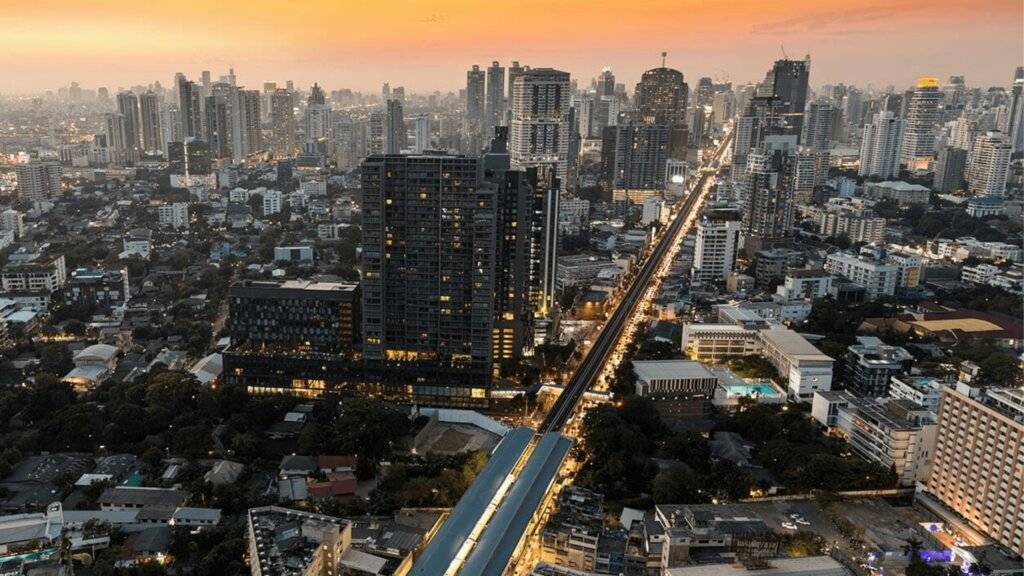
Getting to Know Sukhumvit
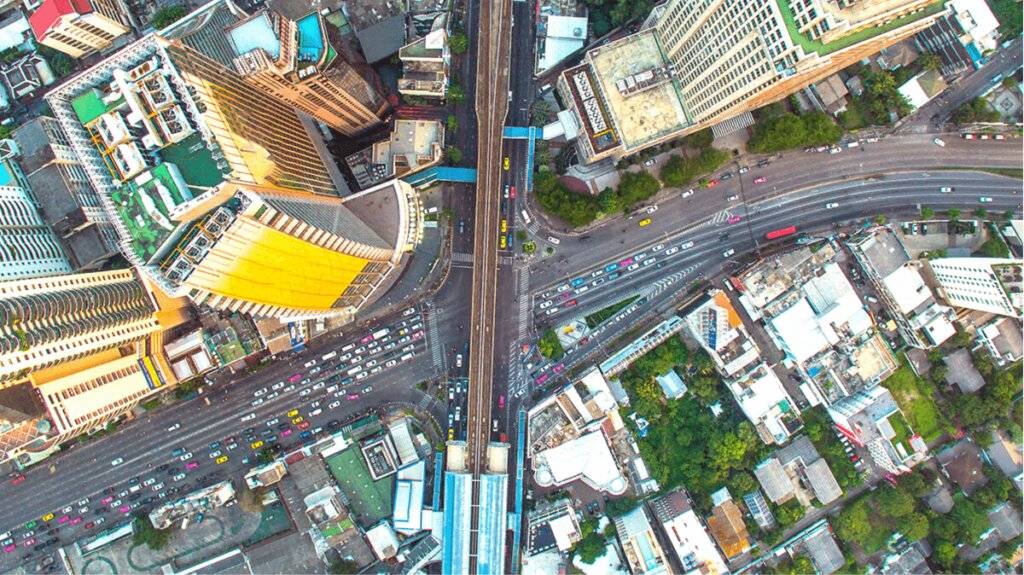
Sukhumvit Road starts at Phloen Chit in central Bangkok. Leading off Sukhumvit Road are many side streets and lanes (sois). Odd-numbered sois will be on your left or northern side, and even numbers branch off to the right or southern side. To confuse matters further, the sois don’t align opposite. For example, Sukhumvit Soi 22 is across from Sukhumvit Soi 29. Additionally, some sois have alternate names, like Sukhumvit Soi 55, better known as Soi Thong Lo.
The original BTS ‘Sukhumvit Line’ was 17 stations running from Mo Chit to On Nut. Currently, there are 47 stations in operation on this line from Khu Khot in Pathum Thani on Bangkok’s north and eastwards along Rama I, Phloen Chit and Sukhumvit Roads, through Bang Na District to Kheha Station in Samut Prakan. Now let’s take a deeper dive into the various sections of the far-reaching asphalt and concrete artery that is Sukhumvit Road.
Bangkok Central – Sukhumvit area:
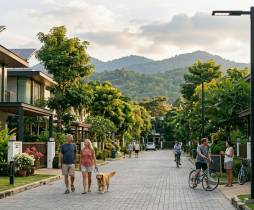
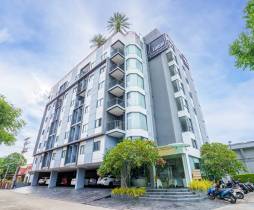
Sukhumvit Soi 1 to Sukhumvit Soi 63 is a popular residential locality, particularly with the abundance of Bangkok condos near the BTS stops.
- Nana area has easy access to Silom and Sathon business district and condos of various sizes, ranges and prices, plus loads of entertainment options.
- Asoke has BTS, MRT, Airport rail link connections, and excellent shopping, including upmarket Terminal 21. Soi 21 has many large national and international company headquarters. This is one of Bangkok’s most culturally diverse areas and is popular with tourists and expatriates.
- Phrom Phong is a shopping and leisure hub with ritzy Emquarter and Emporium, many international cuisine restaurants, and a wealthy neighbourhood. There is an abundance of fine-dining and international cuisine restaurants.
- Thong Lo or ‘Thonglor’ is currently the trendiest precinct with lots of hip hangouts attracting affluent foreigners and Thais, making it one of the more expensive areas in the Sukhumvit residential market. There is a high Japanese population in the area. Therefore, it is blessed with authentic Japanese eateries and supermarkets.
- Ekkamai, popular with the younger set, has a blend of old and new and a more laid back feel offering both expensive and affordable eateries, hotels, condominiums, coffee shops, etc.
- Phra Kanong and On Nut, also on the BTS ‘Sukhumvit’ line, are fast-growing and upcoming areas with increasing popularity for expatriates and Thais. The locations offer an incredibly comfortable and convenient lifestyle and are now ultra-popular residential hubs.
Sukhumvit Heading South
Leaving the Bangkok Metro area, Sukhumvit Road, also called Highway 3 (H3), heads down to the eastern seaboard, travelling through the provinces of Samut Prakan, Chachoengsao, into Chonburi, onto Rayong, and finally, Trat. So what treasures can be found along this meandering throughway?
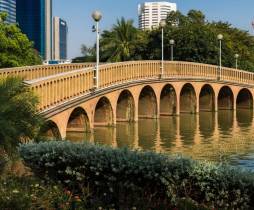
Chonburi Province is home to Pattaya and other interesting gems. Around 14 km of entering Chonburi Province is a deviation off Sukhumvit Road (H3) onto the 4km Cholmarkwithi Bridge built over the water, running parallel to the coast with a fish market and stopping points.
Re-joining Sukhumvit Road (H3), the highway passes through Si Racha, made famous by the spicy sauce Sriracha, said to be initially created by Burmese sawmill labourers working in the town. Si Racha is also the launching point for Koh Si Chang (not to be confused with Koh Chang off Trat), a laid back not so touristy island. Further south again is Laem Chabang, Thailand’s largest seaport.
Pattaya is next, around two hours from Bangkok. It’s little wonder that so many Bangkokians have condos in Pattaya. The real estate market is blessed with an amazing range of apartments to suit any budget and taste, plus lovely beaches, cafes, bars and entertainment options satisfying families, couples and singles.
Sukhumvit Road (H3) continues into Rayong Province with access to another laid back island escape entices Thais and foreigners from Bangkok and has lovely beaches, hotels and restaurants – Koh Samet.
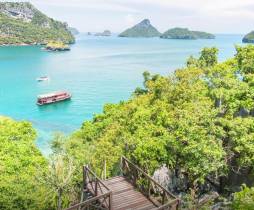
Back on Sukhumvit Road (H3), it continues quite close to the coast through Chanthaburi and into Trat Province. From here, catch a ferry to Thailand’s third-largest island, Koh Chang, also called Elephant Island. Neighbouring Koh Mak and Koh Kood are also beautiful islands and well worth visiting. The road continues south, through the narrowest part of Thailand at 450 meters wide, at Trat-Khlong Yai Road and on to the Cambodian border.
So how long does it take to travel Sukhumvit Road from Phloen Chit to the Cambodian border? According to Google Maps, it will take around nine hours to get along just under 500 km, but it will undoubtedly take much longer with so many interesting deviations.