






Why Long-Term Visas Matter More Than Ever
Global mobility has shifted dramatically. More people are choosing to live abroad, driven by the rise of remote work, changing lifestyle priorities, and the growing availability of long-stay visa programs. The pandemic accelerated this trend, placing greater focus on destinations that offer flexibility, stability, quality of life, affordable living, and clear pathways for employment or investment.
High-net-worth individuals, wealthy retirees, and remote-working professionals are no longer thinking in terms of short stays. Instead, they are seeking a base for the next decade, where lifestyle quality, tax clarity, healthcare access, and long-term security rank highly in decision-making.
Thailand’s response to this shift is the Thailand Long-Term Resident (LTR) Visa, a 10-year program designed for those wishing to live, work, or retire in Thailand on a long-term basis.
In this guide, we compare Thailand’s LTR Visa with global and local alternatives, explain who it is best suited for, and explore where long-term residents are choosing to live and invest across Thailand.
What Is Thailand’s Long-Term Resident (LTR) Visa?
Thailand’s LTR Visa is a 10-year residency program overseen by the Thailand Board of Investment (BOI). It offers a more structured and transparent pathway than traditional long-stay visas, and is designed for financially stable individuals planning a long-term base in Thailand.
Key privileges include:
-
10-year renewable visa, initially granted for five years, and extendable for a further five years, subject to continued eligibility
-
Permission to work in Thailand, supported by a digital work permit
-
A 17% flat personal income tax rate for qualifying highly-skilled professionals
-
Tax exemption for foreign-sourced income, provided it is not remitted to Thailand in the same tax year
-
Streamlined visa and work permit services at the Thailand Investment and Expat Services Centre (TIESC), located at One Bangkok, Lumphini
-
Multiple-entry privileges, with no re-entry permit required
-
Fast Track immigration service at international airports in Thailand
-
Annual reporting instead of standard 90-day reporting
-
Exemption from the four-Thais-to-one foreigner employment ratio
The LTR Visa is divided into four main categories:
-
Wealthy Global Citizen
-
Wealthy Pensioners,
-
Work-from-Thailand Professionals
-
Highly Skilled Professionals
Spouses and children of LTR visa holders may also apply as dependants, with a maximum of four dependants per applicant.
Eligibility requirements vary by category but generally include income or asset thresholds – typically around USD 80,000 per year, or USD 40,000 for highly skilled professionals – along with minimum asset requirements for wealthy individuals. Mandatory health insurance coverage of at least USD 50,000, or a qualifying financial deposit, is also required.
The LTR program launched in September 2022, has approved more than 7,000 LTR visas to date. The framework continues to evolve, and in 2025, updates included the removal of the income requirement for Wealthy Global Citizens and a reduced corporate revenue threshold of USD 50 million for Work-from-Thailand Professionals, making the LTR Visa more accessible to a wider range of people.
Applicants should always review the most up-to-date requirements on the official Thailand Board of Investment LTR Visa Thailand website.
Thailand LTR Visa vs Global Long-Stay Options: A Snapshot
Globally, long stay residence programs tend to emphasise a primary appeal – whether lifestyle, tax efficiency, or ease of entry. Fewer combine these benefits with clear work rights and long-term certainty within a single framework.
In parts of Europe, including Portugal and Greece, residency options continue to attract retirees and investors. However, tightening regulations, rising property prices, and broader taxation of global income have reduced their appeal for some high-net-worth individuals.
The UAE offers a zero-income-tax environment and strong infrastructure, though long-term residency is often linked to business set up, employment, or high-value property investment, alongside a higher cost of living.
Closer to home, Malaysia’s MM2H program offers multiple visa options requiring fixed deposits, proof of income, and health insurance. Employment rights are generally limited, with the exception of the Platinum tier.
Against this backdrop, Thailand’s LTR Visa stands out for its 10-year duration, foreign-sourced income tax exemption, and legal work permission via a digital work permit, supported by accessible property options and an established expat community.
LTR Visa vs Thailand’s Other Long-Stay Options
Thailand offers several other long-stay visas, each catering to different types of residents.
The Thailand Elite Visa provides stays ranging from five to 20 years, and is aimed at affluent individuals seeking convenience and premium services. Benefits include multiple-entry privileges, fast-track immigration, and concierge support. However, the Thailand Elite Visa does not provide work rights or specific tax planning advantages.
The Destination Thailand Visa (DTV) is a newer option targeting shorter-term residents, digital nomads, and remote workers. This multiple-entry visa is valid for five years and allows stays of up to 180 days per entry, making it suitable for flexibility rather than long-term settlement.
By contrast, the LTR Visa is purpose-built for individuals planning to establish a long-term base in Thailand, combining residency stability, LTR Visa tax exemption benefits for qualifying categories, and clear legal work permission under a single framework.
Popular Regions for Long-Term Living in Thailand
LTR Visa holders have diverse needs; they tend to gravitate towards regions offering lifestyle quality, healthcare access, infrastructure, employment opportunities, and a wide choice of property.
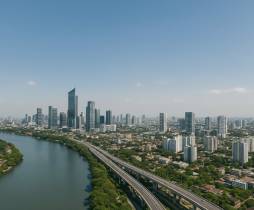
Bangkok remains the top choice for professionals and investors, with world-class hospitals, international schools, extensive mass transit, and a broad selection of condos close to business districts.
Phuket and Koh Samui appeal to lifestyle-focused buyers seeking villas, resort-style living. and international connectivity. Discover what sets Koh Samui and Phuket apart.
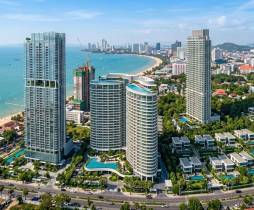
Hua Hin and Pattaya continue to attract long-term retirees, offering coastal living, established expat communities and relatively lower living costs. Compare Pattaya and Hua Hin.
Chiang Mai, known for its cultural heritage and affordability, appeals to expats seeking a slower pace of life.
Foreign Property Ownership for LTR Visa Holders
Property ownership is often a key consideration for those planning a long-term stay in Thailand. While foreigners cannot own land outright, there are well-established and legal pathways for property investment.
Foreign buyers may purchase freehold condominium units within the permitted foreign ownership quota, making condos a popular and straightforward choice. See this step-by-step guide. Villas and landed homes are typically acquired on a leasehold basis or through structured ownership arrangements, particularly in resort locations.
While holding a long-term visa is not a requirement for foreign property ownership, the LTR Visa provides added security and confidence for buyers planning to reside in Thailand long term. Professional advice and reputable developers are essential when navigating ownership structure.
View a wide range of condos for sale in Thailand, from city residences to coastal developments.
Is Thailand’s LTR Visa Right for You?
Thailand’s LTR Visa is best suited to individuals seeking long-term certainty rather than short-term flexibility. For wealthy global citizens, retirees, and professionals planning to base themselves in Thailand, it offers a rare combination of residency stability, tax efficiency, and lifestyle value.
When aligned with the right location and property strategy, the LTR Visa provides an exciting opportunity to live in one of Southeast Asia’s most established and welcoming destinations.