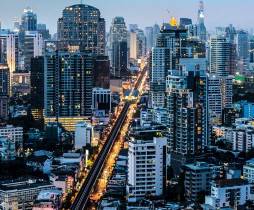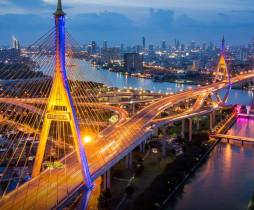






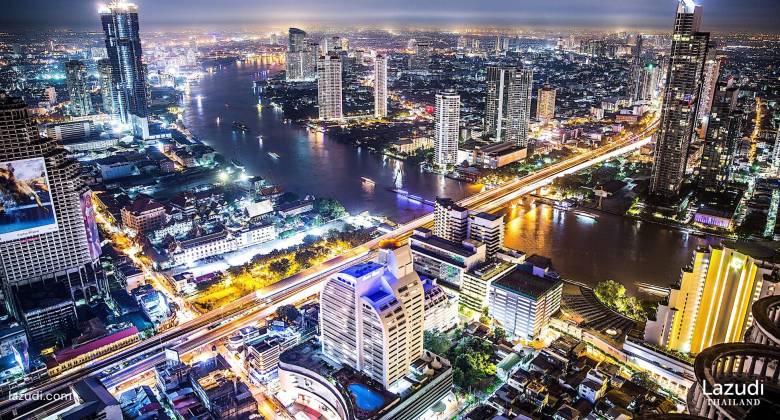
According to the Real Estate Information Centre (REIC) report, vacant land along the BTS lines’ prices continue to rise, but some factors may contribute to the slight increase in land prices. REIC revealed that in the second quarter of this year, the price of vacant land before development along the route that the BTS passes through found that the top 5 highest growth rates for land prices rose compared to the same period last year are future projects that connect to major commercial areas. These areas are areas that are currently being developed. Details are as follows:
No. 1 is the Green Line (Samut Prakan - Bang Pu) and the Green Line (Bearing - Samut Prakan), with land prices in Samut Prakan and Phra Samut Chedi areas where prices have increased.
No. 2 is the Purple Line (Bang Yai - Tao Poon), where land prices in Nonthaburi, Bang Yai and Bang Bua Thong are areas where prices have increased significantly.
No. 3 is the MRT and the Dark Red Line. (Bang Sue - Hua Lamphong). Land prices in Chatuchak, Huai Khwang and Phaya Thai are areas where prices have increased significantly.
No. 4 is the Green Line (Mo Chit - Saphan Mai - Khu Khot) and the Dark Red Line (Bang Sue - TU Rangsit), with land prices in Bang Khen, Lak Si, Don Mueang and Khlong Luang areas where prices have increased significantly.
No 5. is the Dark Red Line (Hua Lamphong - Maha Chai), with land prices in Chom Thong, Bang Bon, and Bang Khun Thian areas where prices have increased a lot.
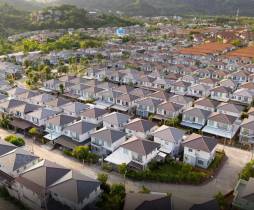
The conditions of land prices have changed which reflect that the land on the outskirts of Bangkok and the perimeter has changed as the conversion of the price is very high. This is because land in suburban areas is inexpensive and can be used to develop low-rise housing. This makes it possible to manage the cost of housing prices in line with the ability to purchase houses.
Factors that cause the price of vacant land to increase at a slower rate is because the Thai economy in the second half of the year has a slower growth than expected. This was also due to the cancellation of the BOT's LTV easing measure and the situation of household debt that still has a high ratio of 90% of GDP and a period of increasing interest rates. All of these are factors that will reduce people's ability to purchase and pay instalments for housing.
To conclude, this result in the purchasing power of housing has slowed down significantly. Entrepreneurs, therefore, postponed plans to launch new projects from this year to 2024, resulting in some slowdown in the purchase of vacant land to support development in many locations. In addition, the government has announced the full rate of land and building tax collection.
Last by not least, please stay tuned to our blog for more property news updates!