





 Are you considering buying or selling property in Thailand? Buying and selling property in any country can throw a few curveballs. Toss in language barriers and unfamiliar legislation, and it can become quite challenging but by no means insurmountable.
The following suggestions may help.
- Scour the internet, and talk with long-time expats to get their take on the processes.
- Engage a trustworthy real estate agent.
- Importantly, enlist the service of a respected and experienced lawyer. Choosing a firm with foreign and Thai nationals can make the process relatively painless.
- Seek advice from a knowledgeable accountant familiar with the process and dealing with foreigners.
Regarding foreigners purchasing property – in Thailand, foreigners are not allowed to own land outright. Here are the options:
- Invest in a condo in your own name. (Most common)
- Take a lease on landed property.
- Establish or purchase a Thai company which will own the land and any dwellings on it. The foreigner cannot hold more than 49% of the company’s shares. Consult your lawyer if considering this option.
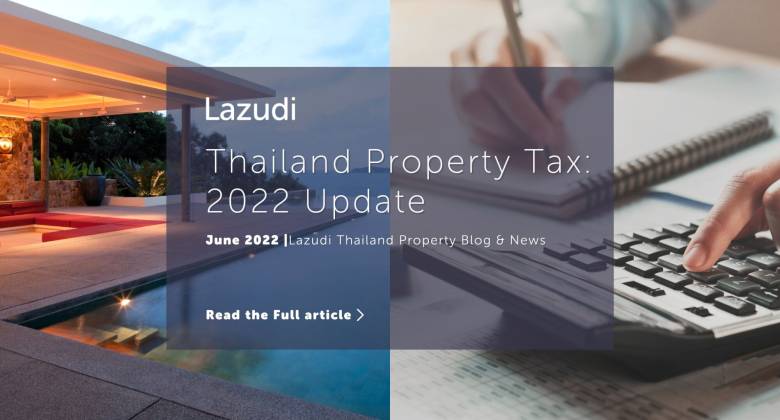
Like any country, transferring property ownership means paying taxes of various types. Initially, it may be confusing, with different terminology, but you may also find similarities to your home country. This article focuses on two key aspects of Thailand’s property taxes when purchasing or transferring a property.
- Tax on buying and selling property in Thailand.
- Annual tax payments.
Tax on Buying and Selling (transferring) Property
The transfer of property usually occurs at the Land Office on the date stipulated in the contract, and whilst you are ideally present, your lawyer should manage the process. This is also when final payments are made per the contract. All tax liabilities are settled, and the property registration is transferred to you.
The Land Office sets out the tax payable for the transfer of immovable property (land, house, condominium). Notably, the Land Office does not outline which party pays the different taxes. This question must be resolved during the negotiation process. Especially if you, as the buyer, do not want to be landed with an unexpected tax debt.
Freehold Land and Property
| Tax | Amount | Who usually pays |
| Transfer fee | 2% of the appraised value of the property (***discounted in 2022) | Seller/buyer (by negotiation) |
| Business Tax | 3.3% over the registered (sale) value or appraised value (whichever is higher) | Seller |
| Stamp Duty | 0.5% over the registered value. Only payable if exempt from business tax. | Seller |
| Withholding tax |
|
Seller (not negotiable) |
*** The 2% transfer registration fee is reduced to 0.01% until 31 December 2022.
Properties under leasehold or a Thai company may have slightly different tax implications. Your lawyer can outline the differences.
Annual Tax Payments
Thailand’s new Land and Building Tax Act came into effect on 1 January 2020, replacing several pieces of legislation regarding property and taxation.
This new tax applies to immovable property – residential, commercial, agricultural, and unused/vacant properties. The tax is imposed on property held on 1 January and payable in April.
A two-year transition period, which conveniently coincided with the pandemic, applied in 2020 and 2021, with reduced tax rates, however, this will not be applicable in 2022.
For residential property, 0.3% tax will apply to the appraised value of the land, building, or condominium unit. Appraisals are completed every four years. The last was scheduled for 2020 but postponed due to the pandemic. Different tax rates apply to other property types.
Some exemptions may apply:
- A tax-exempt threshold of 50 million baht applies to land and buildings owned by individuals using it as their residence, provided their names appear in the house registration book on 1 January of the tax year.
- A tax-exempt threshold of 10 million baht applies to buildings owned by individuals who are not the landowner, but use the property as their residence, provided their names appear in the house registration book. This would include a condominium unit.
When transferring property, your lawyer will assist with conveyancing and help you to understand the process and your obligations. There are other considerations that you need to be aware of. For example, moving funds from your home country to pay for a property requires special bank documentation for settlement. This same document is also essential when you want to transfer such funds back out of Thailand. Another reason why engaging a knowledgeable property lawyer will be invaluable.
Disclaimer:
This article provides a general overview of taxes applicable when property changes hands. However, these may vary depending on your particular circumstances around the sale. Seeking professional advice from a lawyer and accountant is essential to ensure a smooth ownership transition and ongoing enjoyment of your own piece of Thailand.
You may also be interested in these topics:
1.Everything You Need to Know Before Buying A House in Thailand
2.What are the benefits of real estate investing in Thailand?