





 Whether you are looking to buy property in Thailand so that you can relocate and live in paradise, or you are simply looking to make a smart investment to flip or rent out as a holiday home, the process remains more or less the same.
In this article, we will tell you everything you need to know about buying property in Thailand, including the overall process involved, and finalising the details.
Step 1 – Find a reputable real estate agent
The first and arguably most important step of all is finding a reputable real estate agent to represent and assist you throughout the property purchase process in Thailand. Whether you are a seasoned property investor or you are a first time buyer, having the necessary representation in a foreign market is always strongly recommended.
The process of buying property in Thailand as a foreigner can be complicated, so working with a well-established real estate company that has developed a solid reputation for delivering an excellent customer service is an essentiality.
Once you are comfortable with your real estate agent, you can list all of your requirements to them in order to help track down your dream home or prime real estate for investment.
Step 2 – Consulting with your legal representation
Any real estate agency worth their salt will either have their own in-house legal team, or will work closely with and be able to recommend excellent legal representation in Thailand. This is another critical aspect when purchasing property in Thailand.
When you are investing so much of your hard earned money in a foreign market, you must ensure that everything is above board and that you are not being taken advantage of. With proper legal representation, they can vet all of the potential sellers and relevant documentation on your behalf.
Step 3 – A title search
Before rushing into anything, you must do a comprehensive examination of the title deed recorded at the Land Office. This is critical in verifying that the seller is indeed the clear and legal owner and has the authority to sell the land and property to you.
A thorough title search will trace the property back all the way to its very first possession, revealing any registered interests on the land, such as existing mortgages, etc.
Finalising the details
– Agreement of terms and conditions: you must ensure that all parties agree to the main T’s and C’s of the transaction, especially you! This means, the purchase price, the reservation deposit that will secure your property, the buying conducting their due diligence, any furniture or finishing included in the price (if applicable), the relevant taxation and transfer fees (who is responsible for what?), and when will you officially take ownership. Again, make sure your real estate agent and legal representative reviews these documents with you.
- Reservation Agreement: the reservation agreement will outline all of the general T’s and C’s involved, with a particular focus on the timeline involved with your purchase. In other words, how soon will you be able to get moved into your new property after finalising the financial aspect?
- Reservation Deposit: how much money will be required to secure the property in question and remove it from the market? Typically speaking, a 5-10% deposit will be required, as is generally the case in most countries. One must also discern whether said deposit is refundable and if so, subject to what T’s and C’s?
- Sales and Purchase Agreement: in most cases you will have at least 30-days to thoroughly review the T’s and C’s of the Sale and Purchase Agreement. During this time, you must speak with your legal representatives and real estate agent to ensure that absolutely everything is above board, airtight, and to your satisfaction.
- Settlement & Transfer: the settlement & transfer phase, as the name suggests, is when the involved parties will agree on a set transfer date with the government land department. You will be preparing the funds for purchase, while the seller will be putting together all of the original ownership documents to help move the process along.
- Final handover: finally, after what will likely have felt like a long and tiresome process, you will be ready to receive ownership of your new property!!!
Can foreigner’s own condo units in Thailand?
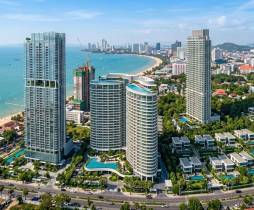
When purchasing property in Thailand, you must be aware of the limitations involved. Fortunately, foreigners are legally allowed to own condominium units outright without much complication. The only real red tape that one must be aware of is that condos in a development project must be majority-owned by Thai nationals at a ratio of 51 – 49%. Assuming that the majority is already owned by Thai nationals, you can purchase and own a condo in that particular development project without any issues.
Can foreigners buy land in Thailand?
Another restriction that one must be aware of when purchasing property in Thailand is the limitations for foreigners owning land outright. If you want to buy land and build a house in Thailand, you must obtain a long term leasehold on the land. Leaseholds are typically available for up to 30-years with total protection, and the option to extend for an additional 30-years.
While you will not own the land outright, you will have full protection. So, provided you keep up with your agreed leasehold payments, you won’t have any problems with your land; and you will be able to legally remain where you are without issue for the full duration.
What other methods of purchase are available to foreigners?
If a leasehold doesn’t appeal to you, or you aren’t looking to own a condo in Thailand, there are other methods available, for example:
- Through a Thai spouse: if you are married with a Thai national, you can invest in Thai property. However, the property must be registered under their name. So, while you are always at a risk of losing your investment should the relationship turn sour, under the assumption that you are happily married with someone that you trust with your life, this is a highly viable and recommended means of purchasing property in Thailand.
- Through a Thai Limited Company: if you are looking to start a business in Thailand and invest in the country, you are able to purchase land and build a house through your Thai Limited Company. The only restriction with this is that 51% of the shareholding must be held by a Thai National. So, as long as your business is functional, successful, and legitimate, you should not have any difficulty.
Conclusion
Buying property in Thailand can feel like a lengthy and overwhelming process, but it doesn’t need to be. If you work with a reputable real estate agency and hire the proper legal representation the process can be smooth and successful.
We hope that you have found this article helpful and insightful and wish you the very best of luck with buying your dream home or the ultimate investment opportunity.